


Patio Epoxy Flooring: The Ultimate Guide to Durable, Stylish Outdoor Surfaces
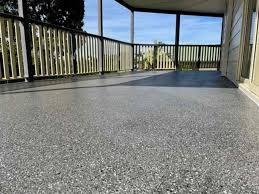
Patio epoxy flooring has become a top choice for homeowners and commercial property owners who want a seamless, long-lasting, and visually striking outdoor surface. Combining industrial-grade durability with modern design flexibility, epoxy transforms ordinary concrete patios into weather-resistant, low-maintenance spaces built for everyday living and entertaining.
This in-depth guide covers everything you need to know—from benefits and design options to installation, costs, and maintenance—so you can decide if patio epoxy flooring is right for your space.
What Is Patio Epoxy Flooring?
Patio epoxy flooring is a multi-layer coating system made from epoxy resins and hardeners applied over concrete. Once cured, it forms a hard, non-porous surface that bonds tightly to the substrate. While epoxy has long been used in garages and industrial facilities, advancements in UV-resistant topcoats and outdoor formulations now make it ideal for patios, pool decks, and exterior walkways.
Key Benefits of Epoxy Flooring for Patios
1. Exceptional Durability
Epoxy creates a surface that resists cracks, stains, abrasions, and heavy foot traffic. It stands up well to outdoor furniture, grills, and frequent use.
2. Weather & Moisture Resistance
When properly installed with outdoor-rated coatings, epoxy resists moisture penetration, rain, and humidity—helping protect concrete from erosion and freeze–thaw damage.
3. Seamless, Easy-to-Clean Surface
Unlike pavers or tiles, epoxy has no grout lines or joints where dirt, mold, or weeds can accumulate. Cleaning usually requires nothing more than a broom or mild soap and water.
4. Customizable Aesthetic Appeal
Epoxy offers unmatched design flexibility, including:
-
Decorative color flakes
-
Metallic finishes
-
Solid colors
-
Stone- or marble-like effects
-
Custom patterns and borders
This allows homeowners to match their patio flooring to landscaping, home exteriors, or outdoor furniture.
5. Slip-Resistant Options
Anti-slip additives can be incorporated into the topcoat, making epoxy a safer choice for wet areas like poolside patios or regions with frequent rain.
Is Epoxy Suitable for Outdoor Patios?
Yes—but only when the right system is used. Outdoor patios require:
-
UV-stable or polyaspartic/polyurethane topcoats to prevent yellowing
-
Proper surface preparation and moisture testing
-
Professional installation for long-term performance
Indoor-grade epoxy alone is not recommended outdoors without protective coatings.
Patio Epoxy Flooring Installation Process
-
Surface Preparation
The concrete is mechanically ground or shot-blasted to remove contaminants and create the proper surface profile. -
Crack & Imperfection Repair
Chips, cracks, and expansion joints are repaired to ensure a smooth, even base. -
Primer Application
A moisture-tolerant epoxy primer enhances adhesion and prevents bubbling. -
Epoxy Base Coat
The main epoxy layer is applied evenly across the patio. -
Decorative Elements (Optional)
Color flakes, metallic pigments, or textures are added while the epoxy is wet. -
UV-Resistant Topcoat
A clear protective topcoat seals the surface, enhances durability, and provides UV and slip resistance. -
Curing Time
Most systems are ready for light foot traffic within 24–48 hours, with full curing in several days.
Design Options for Patio Epoxy Flooring
-
Flake Epoxy: Natural stone appearance with excellent slip resistance
-
Metallic Epoxy: High-end, glossy, marble-like movement
-
Solid Color Epoxy: Clean, modern, and minimalist
-
Quartz Systems: Textured, decorative, and extremely durable
Each style can be customized in color, texture, and finish (matte, satin, or gloss).
Cost of Patio Epoxy Flooring
The average cost typically ranges from $6 to $12 per square foot, depending on:
-
Patio size
-
Surface condition
-
Design complexity
-
Number of coating layers
-
Type of topcoat used
While epoxy may cost more upfront than paint or sealers, its longevity and minimal maintenance often make it more cost-effective over time.
Maintenance & Longevity
Maintenance Tips
-
Sweep regularly to remove dirt and debris
-
Clean with mild soap and water
-
Avoid harsh chemicals or abrasive scrubbers
-
Use furniture pads under heavy items
How Long Does It Last?
With professional installation and proper care, patio epoxy flooring can last 10–20 years or more, even in outdoor environments.
Common Patio Epoxy Flooring FAQs
Does epoxy get slippery when wet?
Not if a slip-resistant additive is included in the topcoat.
Will epoxy fade in sunlight?
UV-stable topcoats significantly reduce discoloration and fading.
Can epoxy be applied over old concrete?
Yes, as long as the concrete is structurally sound and properly prepared.
Is epoxy environmentally friendly?
Many modern epoxy systems are low-VOC and environmentally compliant once cured.
Is Patio Epoxy Flooring Right for You?
If you’re looking for a patio surface that combines durability, modern design, and low maintenance, epoxy flooring is an excellent investment. It elevates outdoor spaces, increases usability, and adds long-term value to your property.
Final Thoughts
Patio epoxy flooring offers a powerful blend of performance and aesthetics that few outdoor flooring options can match. With the right materials, professional installation, and thoughtful design, epoxy can transform your patio into a stylish, weather-resistant extension of your home—built to last for years to come.
Προωθημένο
Προωθημένο
Κατηγορίες
- AI
- Μορφή
- Fashion and Art
- Investment and Finance
- Top 10
- Christianity
- Climate and Enviroment
- Writing and Film
- Fitness
- Food
- Παιχνίδια
- Gardening
- Health
- Home and Interiors
- Marketing and Sales
- Music
- Making Money Online
- Others
- Books
- Religion
- Ecommerce
- Sports
- Cars
- Wellness
- Tech Gadgets
- Events
- Governments and Nations
- Science and Engineering
- Real Estate
- Travel, Tourism and Hospitality
- Εκπαίδευση
- Startups
- Beauty and Cosmetics
- Agriculture
- Computer Operating Systems
- Crypto
- Politics and News
- Video Review
- Immigration
Διαβάζω περισσότερα
Introduction The global Hydrotalcite market is experiencing robust growth as demand rises across plastics, pharmaceuticals, environmental applications, and catalysts. According to Market Intelo’s latest data, the market was valued at USD 832 million in 2023 and is projected to reach USD 1.52 billion by 2032, expanding at a CAGR of 6.8% during the forecast period. This momentum is driven...

"Global Demand Outlook for Executive Summary Cloud-Based Product Lifecycle Management (PLM) Market Size and Share CAGR Value Global cloud-based product lifecycle management (PLM) market was valued at USD 37.54 billion in 2021 and is expected to reach USD 129.58 billion by 2029, registering a CAGR of 16.75% during the forecast period of 2022-2029. Cloud-Based Product Lifecycle...

"Key Drivers Impacting Executive Summary High Grade Transparency Sapphire Glass Market Size and Share Data Bridge Market Research analyses that the high grade transparency sapphire glass market was valued at USD 843.20 million in 2021 and is expected to reach USD 1,284.27 million by 2029, registering a CAGR of 5.40 % during the forecast period of 2022 to 2029 The credible High Grade...
The Ventilation fan Market size was valued at USD 2.08 Billion in 2024 and the total Ventilation fan revenue is expected to grow at a CAGR of 7.18% from 2025 to 2032, reaching nearly USD 3.63 Billion. Ventilation fan Market Overview Maximize Market Research is a research firm. They provided an in-depth analysis of the "Ventilation fan Market". The analysis includes...

Executive Summary Cable Modem Termination System (CTMS) Market: Growth Trends and Share Breakdown The global cable modem termination system (CTMS) market size was valued at USD 6.93 billion in 2024 and is expected to reach USD 11.99 billion by 2032, at a CAGR of 7.08% during the forecast period. Being a premium market research report, Cable Modem Termination...