


How to Secure Facial Recognition Systems Against Spoofing and Attacks
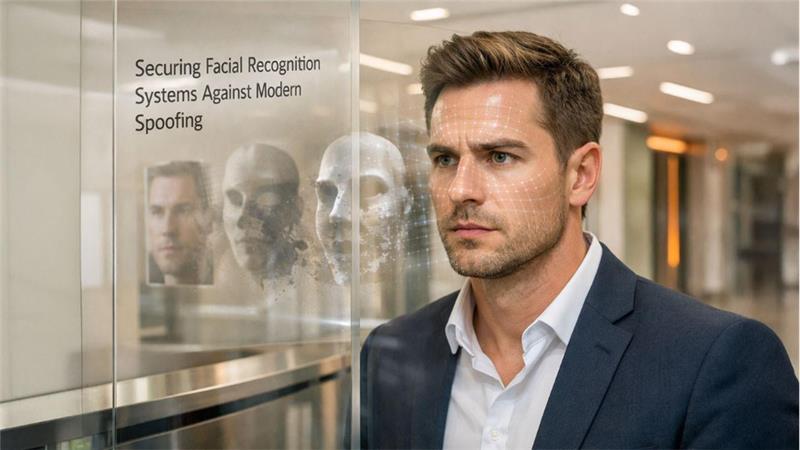
Facial recognition has quietly moved from sci-fi to everyday infrastructure. It unlocks phones, verifies payments, manages office access, and even helps detect fraud. But as adoption grows, so does the incentive to break it. Attackers are no longer guessing passwords—they’re printing high-resolution masks, replaying videos, and exploiting weak integrations.
The uncomfortable truth is this: facial recognition systems are only as strong as their weakest security layer. And spoofing attacks are getting smarter faster than many defenses.
This article breaks down how modern facial recognition systems are attacked, what actually works to secure them, and how forward-thinking organizations can design systems that hold up under real-world pressure.
Why Facial Recognition Systems Are a High-Value Target
Unlike passwords, faces can’t be reset. Once biometric data is compromised, the damage is permanent. That makes facial recognition systems especially attractive to attackers.
Common use cases under attack today include:
-
Identity verification in fintech and banking
-
Physical access control for offices and data centers
-
Remote employee authentication
-
Customer onboarding and KYC flows
A successful spoof doesn’t just grant access—it undermines trust in the entire system.
“Biometrics don’t fail silently. When they fail, they fail loudly.”
Understanding Spoofing and Attack Vectors
Before talking about defense, it’s important to understand how facial recognition systems are actually attacked.
Common Spoofing Techniques
|
Attack Type |
Description |
Risk Level |
|
Photo Attack |
Printed or digital image shown to camera |
Low–Medium |
|
Video Replay |
High-resolution video replayed on screen |
Medium |
|
3D Mask |
Silicone or resin mask mimicking face depth |
High |
|
Deepfake Injection |
AI-generated facial video streams |
Very High |
|
Sensor Bypass |
Exploiting camera or SDK vulnerabilities |
Critical |
The most dangerous attacks don’t look suspicious to humans. They exploit how algorithms interpret light, depth, and motion.
Liveness Detection: Your First Line of Defense
Static face matching is no longer enough. Liveness detection determines whether a real, live human is present during authentication.
Types of Liveness Detection
Passive Liveness
-
Analyzes micro-movements, skin texture, light reflection
-
No user interaction required
-
Better user experience, harder to spoof
Active Liveness
-
Asks user to blink, smile, or turn head
-
Easier to implement
-
Increasingly vulnerable to AI-generated video attacks
Modern facial recognition systems combine both.
The future belongs to passive-first, behavior-aware liveness detection.
Hardware Matters More Than Most Teams Admit
Many security failures happen before software even runs.
Low-quality cameras flatten depth, distort color, and remove the subtle cues liveness systems depend on. Infrared and depth sensors dramatically raise the bar for attackers.
Key hardware considerations:
-
IR cameras for low-light and spoof resistance
-
Depth sensors to detect 3D structure
-
Secure camera firmware to prevent tampering
This is especially critical when facial recognition is deployed across distributed environments—offices, kiosks, or remote endpoints managed through enterprise platforms and integrated workflows such as those found in modern secure digital infrastructure providers like this systems-focused technology partner.
AI Models Must Be Trained for Adversarial Reality
Many facial recognition systems are trained on clean datasets. Attackers don’t operate in clean conditions.
To improve resilience:
-
Train models using spoofed samples (photos, videos, masks)
-
Include adversarial deepfake data
-
Continuously retrain as new attack patterns emerge
Static models decay quickly. Security teams should treat facial recognition like an evolving threat surface, not a finished feature.
Secure the Pipeline, Not Just the Face Match
A facial recognition system isn’t just a camera and an algorithm. It’s a full pipeline—and attackers target the gaps.
Critical areas to secure:
-
Data transmission between camera and server
-
API endpoints used for verification
-
Storage of biometric templates
-
Integration points with identity or customer platforms
This is where many implementations quietly fail. When facial recognition feeds directly into customer or employee workflows, secure orchestration and access control become just as important as the biometric match itself. Platforms that unify identity verification with broader relationship and access management—similar to how intelligent customer engagement platforms like this enterprise CRM solution operate—help reduce fragmented security logic.
Rate Limiting and Behavioral Monitoring
Spoofing attempts are rarely one-and-done. Attackers test systems repeatedly.
Effective defenses include:
-
Rate limiting verification attempts
-
Detecting abnormal retry patterns
-
Flagging mismatched device fingerprints
-
Monitoring time-of-day anomalies
Facial recognition should never operate in isolation. Behavioral context turns a biometric check into a decision, not just a match.
Privacy and Security Are Not Opposites
Over-collection increases risk. The most secure facial recognition systems store:
-
Encrypted biometric templates, not raw images
-
Minimal data required for verification
-
Clear expiration and deletion policies
Compliance isn’t just legal hygiene—it’s attack surface reduction.
The safest biometric data is the data you never store.
Regular Red-Teaming and Real-World Testing
If you’ve never tried to break your own system, someone else will.
Best practices:
-
Conduct spoofing simulations using real attack tools
-
Test across different lighting, devices, and environments
-
Validate performance against deepfake inputs
-
Audit third-party SDKs regularly
Security teams should treat facial recognition systems like payment infrastructure—continuously tested, continuously hardened.
Where Facial Recognition Security Is Heading
The next generation of secure facial recognition systems will rely on:
-
Multimodal biometrics (face + voice + behavior)
-
Continuous authentication instead of one-time checks
-
Edge-based processing to reduce exposure
-
AI models trained specifically for deception detection
The goal isn’t perfect security. It’s making spoofing expensive, unreliable, and detectable.
Final Thought: Design for Attack, Not for Demo
Facial recognition works beautifully in controlled demos. Attackers live in the real world.
Securing facial recognition systems against spoofing and attacks requires thinking beyond accuracy scores and vendor promises. It demands strong hardware, adaptive AI, secure integrations, and continuous monitoring.
Teams that design with adversaries in mind build systems that last. Those that don’t end up rebuilding after trust is already broken.
In biometric security, resilience isn’t optional—it’s the product.
Gesponsert
Gesponsert
Kategorien
- AI
- Design
- Fashion and Art
- Investment and Finance
- Top 10
- Christianity
- Climate and Enviroment
- Writing and Film
- Fitness
- Food
- Spiele
- Gardening
- Health
- Home and Interiors
- Marketing and Sales
- Music
- Making Money Online
- Others
- Books
- Religion
- Ecommerce
- Sports
- Cars
- Wellness
- Tech Gadgets
- Veranstaltungen
- Governments and Nations
- Science and Engineering
- Real Estate
- Travel, Tourism and Hospitality
- Ausbildung
- Startups
- Beauty and Cosmetics
- Agriculture
- Computer Operating Systems
- Crypto
- Politics and News
- Video Review
- Immigration
Mehr lesen
As per MarkNtel Advisors The Global Data Center Liquid Cooling Market size is valued at around USD 5.51 billion in 2025 and is expected to reach USD 19.03 billion by 2030. Along with this, the market is estimated to grow at a CAGR of around 22.95% during the forecast period, i.e., 2025-30. Global Data Center Liquid Cooling Market Systems Market Outlook: The Russian Seed Market is...

The Pet Grooming Market is poised for significant growth in 2025, driven by increasing pet ownership, humanization of pets, and rising consumer awareness about pet hygiene and wellness. As more people view their pets as family members, the demand for professional grooming services and high-quality grooming products is expanding rapidly. A key driver of this growth is the...

According to a new report from Intel Market Research, the global Fixed Focus Electronically Adjustable Lens market was valued at USD 30.7 million in 2024 and is projected to reach USD 56.4 million by 2031, growing at a steady CAGR of 9.2% during the forecast period (2025-2031). This growth trajectory reflects increasing demand from security, medical...

Detailed Analysis of Executive Summary DevOps Market Size and Share The global DevOps market size was valued at USD 10.45 billion in 2024 and is expected to reach USD 59.04 billion by 2032, at a CAGR of 24.16% during the forecast period. When market research report is brilliant and precise, it proves to be a backbone for the business that helps to...
Global Leak Indication Paint Market demonstrates steady expansion, currently valued at USD 11 million in 2024 with projections indicating growth to USD 15.9 million by 2032, advancing at a CAGR of 5.5%. This specialized segment serves critical industrial applications where immediate visual leak detection provides operational and environmental safety advantages that conventional systems struggle...