


Top Techniques Used in Insurance Claim Investigations

Insurance claim investigations play a critical role in the financial stability of insurance companies and the integrity of the industry. Fraudulent claims not only inflate costs for insurers but also drive up premiums for honest policyholders.
To combat this, insurers employ a variety of investigative techniques designed to verify the legitimacy of claims and detect fraudulent activity. Understanding these methods is crucial for professionals in the insurance sector, as well as for policyholders who wish to navigate the claims process responsibly.
1. Background Checks and Verification
One of the first steps in an insurance claim investigation is verifying the claimant’s background and history. Insurers often perform comprehensive background checks to detect prior fraudulent behavior, inconsistencies in previous claims, or suspicious patterns of insurance usage. This may include:
Reviewing credit histories to assess financial motivation for fraud.
Examining prior claims to spot repetitive or unusual patterns.
Verifying personal information such as employment, residence, and social security numbers.
By establishing a thorough profile of the claimant, investigators can better assess the credibility of the claim and identify red flags that warrant deeper scrutiny.
2. Document Examination
Insurance claims are typically supported by a range of documents including medical reports, police reports, receipts, invoices, and contracts. Investigators meticulously analyze these documents to detect inconsistencies, alterations, or forgeries. Common techniques include:
Forensic Document Analysis: Using specialized equipment and software to detect altered or forged documents.
Cross-referencing Information: Comparing submitted documents with official records from hospitals, law enforcement, or other institutions.
Timeline Verification: Ensuring that the sequence of events described in documents aligns with the claim details.
Document examination is particularly effective in health, auto, and property insurance claims, where forged receipts or falsified reports can indicate fraudulent activity.
3. Interviews and Interrogations
Face-to-face or telephonic interviews remain a cornerstone of claim investigations. Investigators conduct interviews not only with claimants but also with witnesses, healthcare providers, employers, and even neighbors. Techniques include:
Behavioral Analysis: Observing body language, tone of voice, and inconsistencies in responses to detect deceit.
Cognitive Interviewing: Asking open-ended questions that encourage detailed recollection, which helps uncover discrepancies.
Collateral Interviews: Talking to individuals connected to the claimant’s environment to corroborate information.
These interpersonal techniques allow investigators to gather nuanced insights that cannot always be captured through documents alone.
4. Surveillance
Surveillance is a widely recognized and highly effective method in insurance investigations, particularly in personal injury and disability claims. It involves monitoring the claimant’s activities to verify the accuracy of the reported condition. Common surveillance methods include:
Physical Surveillance: Observing the claimant in public settings to ensure that their activities are consistent with the claimed injury or disability.
Video and Photo Monitoring: Recording movements and behavior for documentation purposes.
Social Media Monitoring: Analyzing online activity for posts or images that contradict the claim, such as evidence of strenuous physical activity despite claiming disability.
While surveillance must comply with privacy laws, it is a powerful tool for identifying exaggerated or fraudulent claims.
5. Technological and Data Analytics Tools
Advancements in technology have transformed insurance claim investigations. Companies now leverage sophisticated software and analytics tools to detect fraud patterns that would be nearly impossible to identify manually. Key techniques include:
Predictive Modeling: Using algorithms to identify claims with a high likelihood of fraud based on historical data.
Text Analytics: Analyzing claim descriptions and communication patterns for inconsistencies or linguistic indicators of deception.
Data Cross-Matching: Comparing claim information against databases from other insurers, public records, and government agencies to detect duplication or falsehoods.
These tools increase efficiency and accuracy, allowing insurers to focus human resources on high-risk claims.
6. Accident Reconstruction and Forensic Analysis
For claims involving auto accidents, property damage, or workplace injuries, accident reconstruction and forensic analysis are vital. Investigators may use these techniques to determine the cause, timing, and mechanics of an incident. Common practices include:
Vehicle and Accident Reconstruction: Analyzing damage patterns, skid marks, and collision angles to verify accident reports.
Forensic Engineering: Inspecting structural failures, machinery malfunctions, or property damage to determine whether they align with the claimant’s story.
Medical Forensics: Evaluating injury claims through expert medical assessments to ensure they match the reported incident.
These scientific methods provide objective evidence that can confirm or refute the legitimacy of a claim.
7. Undercover Operations
In complex fraud cases, insurers may deploy undercover investigators to gather firsthand evidence. These operations are particularly relevant in staged accident schemes or organized fraud rings. Techniques involve:
Pretending to be Claimants or Vendors: Engaging with potential fraudsters to uncover fraudulent schemes.
Observation of Operations: Tracking suspect activities without their knowledge to document suspicious patterns.
Coordination with Law Enforcement: In cases of large-scale fraud, working alongside police or regulatory authorities to collect admissible evidence.
Undercover operations are resource-intensive but can yield critical insights in high-stakes fraud cases.
8. Collaboration with Experts
Insurance claim investigations often require specialized knowledge beyond the investigator’s expertise. Collaborating with external experts can provide critical insights, such as:
Medical Experts: For assessing injury claims, treatment necessity, and recovery timelines.
Financial Analysts: To examine suspicious financial claims or complex fraud schemes.
Engineering Specialists: For evaluating structural damage, machinery failures, or accident mechanics.
These experts enhance the credibility and accuracy of the investigation, ensuring that conclusions are backed by professional knowledge.
9. Legal and Ethical Compliance
All investigative techniques must adhere to legal and ethical standards. Investigators must navigate privacy laws, labor regulations, and insurance-specific legislation to avoid liability. Compliance ensures:
Evidence Admissibility: Techniques used can stand up in court if litigation arises.
Avoidance of Privacy Violations: Surveillance and data collection methods respect legal boundaries.
Ethical Standards: Maintaining transparency and fairness, reducing the risk of false accusations.
Proper compliance not only protects the insurer but also preserves trust in the insurance system.
Conclusion
Insurance claim investigations are a sophisticated blend of traditional detective work, forensic science, and advanced technology. From background checks and document analysis to surveillance, data analytics, and expert collaboration, these techniques ensure that claims are legitimate, protecting both insurers and policyholders.
As fraud schemes evolve, the investigative process must continually adapt, incorporating innovative tools and methodologies to uphold integrity in the insurance industry. By understanding these top techniques, stakeholders gain insight into the rigorous processes that safeguard the financial and ethical foundations of insurance.
Patrocinados
Patrocinados
Categorías
- AI
- Diseño
- Fashion and Art
- Investment and Finance
- Top 10
- Christianity
- Climate and Enviroment
- Writing and Film
- Fitness
- Food
- Juegos
- Gardening
- Health
- Home and Interiors
- Marketing and Sales
- Music
- Making Money Online
- Others
- Books
- Religion
- Ecommerce
- Sports
- Cars
- Wellness
- Tech Gadgets
- Eventos
- Governments and Nations
- Science and Engineering
- Real Estate
- Travel, Tourism and Hospitality
- Educación
- Startups
- Beauty and Cosmetics
- Agriculture
- Computer Operating Systems
- Crypto
- Politics and News
- Video Review
- Immigration
Read More
"Executive Summary Knitwear Market Value, Size, Share and Projections CAGR Value The global knitwear market was valued at USD 907.60 billion in 2024 and is expected to reach USD 2263.28 billion by 2032. During the forecast period of 2025 to 2032 the market is likely to grow at a CAGR of 12.10% Being a comprehensive in nature, Knitwear Market report undeniably...

The Forklift Trucks Market size was valued at USD 54.80 Billion in 2024 and the total Forklift Trucks revenue is expected to grow at a CAGR of 6.8% from 2025 to 2032, reaching nearly USD 92.77 Billion. Forklift Trucks Market Overview A renowned global market intelligence titan has unveiled its latest opus - an all-encompassing market research report, immersing itself in the...

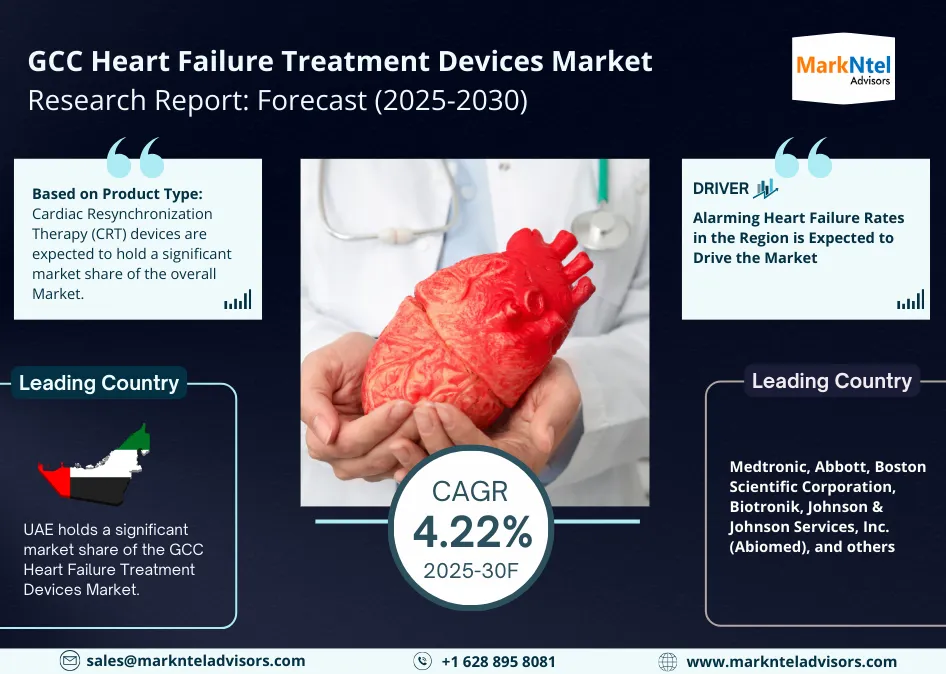
As per MarkNtel The GCC Heart Failure Treatment Devices Market size was valued at around USD 765 million in 2024 and is projected to reach USD 986 million by 2030. Along with this, the market is estimated to grow at a CAGR of around 4.22% during the forecast period, i.e., 2025-30. GCC Heart Failure Treatment Devices Market Systems Market Outlook: With GCC countries like the...
Competitive Analysis of Executive Summary Fire Protection System Market Size and Share The global fire protection system market size was valued at USD 81.22 billion in 2024 and is projected to reach USD 150.11 billion by 2032, with a CAGR of 7.98% during the forecast period of 2025 to 2032. A competition that is getting higher day by day has kept many challenges in front of the...
Global Metal Packaging Coatings Market continues to demonstrate steady growth, with its valuation reaching USD 3,249 million in 2024. According to the latest industry analysis, the market is projected to grow at a CAGR of 3.6%, reaching approximately USD 4,130 million by 2031. This growth is largely driven by increasing demand for food safety and preservation solutions across beverage,...