

Employee Self Service: How ESS Is Transforming Modern HR Operations
In today’s fast-moving workplaces, HR teams are expected to do much more than manage paperwork. From employee engagement to compliance and workforce planning, the expectations from HR departments have grown rapidly. This is exactly where Employee Self Service comes into the picture.
Employee Self Service, often referred to as ESS, is no longer just a “nice-to-have” feature. It has become a core component of modern HR systems, helping organisations streamline HR operations while empowering employees to manage their own information. In this blog, we’ll take a deep dive into what Employee Self Service is, how it works, and why businesses are increasingly adopting HRMS ESS platforms.
What Is Employee Self Service?
Employee Self Service is a digital interface within an HRMS that allows employees to access, manage, and update their HR-related information without depending on the HR department for every small request.
Instead of emailing HR for payslips, leave balances, attendance records, or personal detail changes, employees can simply log in to the HRMS Employee Self Service portal and handle these tasks on their own.
At its core, ESS shifts HR from a manual, request-based function to a self-driven, employee-centric experience.
Why Employee Self-Service Has Become Essential for HR Teams
Traditional HR processes are time-consuming and reactive. HR professionals often spend hours responding to repetitive employee queries, maintaining records, and processing approvals. Employee Self Service changes this dynamic completely.
With ESS in place, HR teams can move away from administrative overload and focus on strategic initiatives such as talent development, performance management, and employee engagement.
At the same time, employees benefit from transparency, faster access to information, and a sense of control over their own data.
How Employee Self-Service Works in an HRMS

A typical HRMS ESS module is integrated directly into the organisation’s HR software. Once an employee logs in, they get access to a personalised dashboard that displays relevant HR information and actions.
Behind the scenes, the HRMS ensures:
-
Data accuracy and role-based access
-
Automated workflows for approvals
-
Real-time updates across HR, payroll, and compliance systems
This seamless integration is what makes HRMS Employee Self Service both reliable and scalable for growing businesses.
Key Features of Employee Self Service
Although features may vary across platforms, most ESS systems include the following core functionalities:
Personal Information Management
Employees can update their contact details, emergency contacts, bank information, and other personal records without HR intervention.
Leave & Attendance Management
ESS allows employees to apply for leave, check leave balances, view attendance records, and track approval status in real time.
Payslips & Salary Information
Employees can access monthly payslips, tax deductions, and salary breakups anytime, reducing payroll-related queries to HR.
Document Access
Offer letters, appointment letters, policy documents, and compliance forms are available in one secure location.
Employee Requests & Approvals
From reimbursements to attendance corrections, ESS simplifies request submission and approval workflows.
Employee Self Service and HRMS ESS: What’s the Difference?
Many organisations use the terms interchangeably, but there is a subtle distinction.
Employee Self Service refers specifically to the employee-facing functionality, while HRMS ESS is the ESS module within a broader HR Management System. In simple terms, ESS is a feature, and HRMS ESS is the platform that enables it.
An advanced HRMS Employee Self Service solution ensures that employee actions automatically reflect across payroll, compliance, and HR records, eliminating duplicate work and errors.
Benefits of Employee Self-Service for Employees
From an employee’s perspective, ESS significantly improves the workplace experience.
Employees no longer need to wait for HR responses for routine information. Everything they need is available instantly, which builds trust and transparency. ESS also encourages accountability, as employees take ownership of their own data and requests.
In remote and hybrid work environments, Employee Self Service becomes even more valuable, enabling seamless HR access regardless of location.
Benefits of Employee Self-Service for HR Teams
For HR departments, the impact of ESS is transformational.
Manual tasks such as updating records, sending payslips, or responding to basic queries are drastically reduced. This leads to better time management, fewer errors, and improved compliance.
By using HRMS ESS, HR teams can standardise processes, maintain accurate records, and ensure that all actions are properly documented and auditable.
Role of Employee Self Service in HR Operations
Employee Self Service plays a crucial role in streamlining overall HR operations. It acts as a bridge between employees and HR, ensuring smooth communication and data flow.
Key HR processes supported by ESS include:
-
Onboarding and employee data management
-
Attendance and leave tracking
-
Payroll coordination
-
Compliance documentation
-
Employee engagement initiatives
When ESS is implemented effectively, HR operations become faster, more consistent, and less dependent on manual intervention.
Employee Self-Service in the Onboarding Process
One of the most impactful use cases of Employee Self Service is onboarding.
New hires can complete documentation, submit personal details, upload required documents, and access company policies through the ESS portal. This not only speeds up onboarding but also creates a positive first impression of the organisation’s HR maturity.
With HRMS Employee Self Service, onboarding becomes a structured and scalable process, even when hiring volumes increase.
Data Accuracy and Compliance Through ESS
Data accuracy is a major challenge in HR management. When information is handled manually, errors are inevitable.
Employee Self Service improves accuracy by allowing employees to directly update their own information. This reduces the risk of incorrect records, payroll errors, and compliance issues.
From a compliance standpoint, ESS ensures that statutory documents, acknowledgements, and records are stored securely and can be retrieved easily during audits.
Security and Privacy in Employee Self Service Systems
Since ESS handles sensitive employee data, security is a top priority.
Modern HRMS ESS platforms use role-based access, data encryption, and secure authentication methods to protect employee information. Employees can only view or edit data relevant to them, while HR retains administrative control.
A reliable HRMS Employee Self Service system ensures compliance with data protection standards and builds employee confidence in the platform.
How Employee Self Service Supports Remote & Hybrid Work
As work models evolve, ESS has become a critical enabler for distributed teams.
Remote employees can access HR services without physical interaction, ensuring continuity and consistency. From attendance tracking to document access, Employee Self Service ensures that location is no longer a barrier to HR support.
This flexibility makes ESS particularly valuable for growing organisations and multi-location teams.
Common Challenges in Implementing Employee Self Service
While ESS offers numerous benefits, implementation needs careful planning.
Some common challenges include:
-
Employee resistance to change
-
Lack of proper training
-
Poor user interface design
-
Incomplete integration with payroll or attendance systems
These challenges can be addressed by choosing a user-friendly HRMS ESS platform and providing clear communication and training to employees.
Best Practices for Successful ESS Adoption
To get the most out of Employee Self Service, organisations should:
-
Start with clear objectives
-
Roll out features in phases
-
Provide employee training and support
-
Regularly collect feedback
-
Ensure seamless integration with existing HR systems
A well-implemented HRMS Employee Self Service solution delivers long-term value and high adoption rates.
Future of Employee Self Service
The future of Employee Self Service lies in automation and intelligence.
AI-driven chatbots, mobile-first ESS platforms, predictive analytics, and personalised employee experiences are shaping the next generation of HRMS ESS solutions.
As organisations continue to prioritise employee experience and operational efficiency, ESS will remain a foundational element of modern HR strategy.
Conclusion
Employee Self Service is no longer just an HR feature—it is a strategic tool that empowers employees, simplifies HR operations, and improves organisational efficiency.
By adopting a robust HRMS ESS solution, businesses can reduce administrative burden, improve data accuracy, and create a more transparent and engaging employee experience. In a world where agility and efficiency matter more than ever, HRMS Employee Self Service is not just the future of HR—it is the present.
Sponsorizzato
Sponsorizzato
Categorie
- AI
- Design
- Fashion and Art
- Investment and Finance
- Top 10
- Christianity
- Climate and Enviroment
- Writing and Film
- Fitness
- Food
- Giochi
- Gardening
- Health
- Home and Interiors
- Marketing and Sales
- Music
- Making Money Online
- Others
- Books
- Religion
- Ecommerce
- Sports
- Cars
- Wellness
- Tech Gadgets
- Events
- Governments and Nations
- Science and Engineering
- Real Estate
- Travel, Tourism and Hospitality
- Formazione
- Startups
- Beauty and Cosmetics
- Agriculture
- Computer Operating Systems
- Crypto
- Politics and News
- Video Review
- Immigration
Leggi tutto
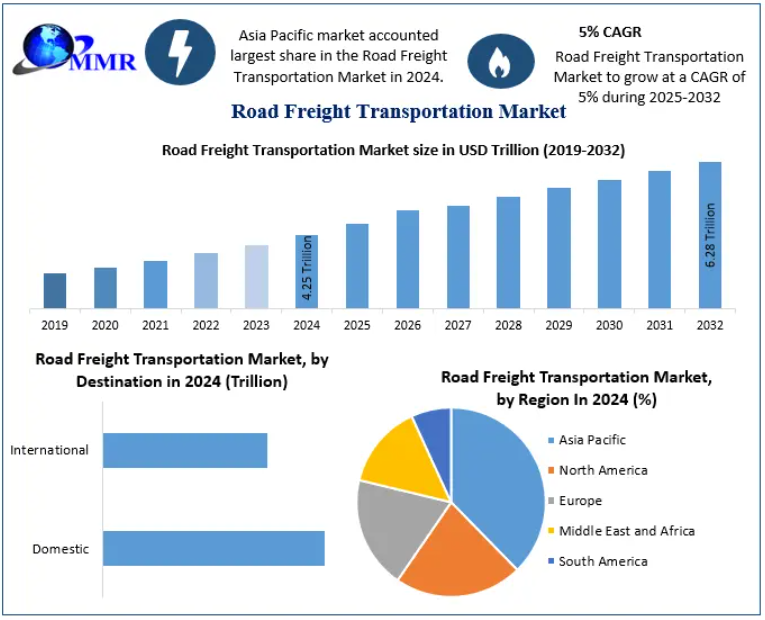
Road Freight Transportation Market – Global Industry Analysis and Forecast (2025–2032) Market Size: USD 4.25 Trillion (2024) | Forecast CAGR: 5.0% | Projected Value: USD 6.28 Trillion (2032) Road Freight Transportation Market Overview The Road Freight Transportation Market plays a pivotal role in the global logistics and supply chain ecosystem, facilitating the movement of...
The Growing Importance of Solar Panel O&M As the world increases investment in renewable energy, solar photovoltaic (PV) systems are expanding rapidly—on rooftops, in commercial & industrial setups, and utility-scale farms. But installing panels is only part of the story. To ensure these systems deliver promised returns (in terms of energy output, lifecycle, cost savings, and...

MarkNtel Advisors, a leading market research and consulting firm, has announced the release of its latest study titled Dragon Fruit Market Research Report: Forecast (2025–2030). This report provides a detailed assessment of the Dragon Fruit Market, covering its evolving dynamics, emerging trends, key growth drivers, major challenges, and competitive landscape. Designed to guide...

"Detailed Analysis of Executive Summary North America Gloves Market Size and Share The North America gloves market size was valued at USD 14.63 billion in 2024 and is expected to reach USD 30.46 billion by 2032, at a CAGR of 9.60% during the forecast period This North America Gloves Market report serves you with the bigger picture of the marketplace as...

Brake Pad Market Overviews Maximize Market Research is an Brake Pad research firm that has published a detailed analysis of the “Brake Pad Market”. MMR's in-depth market assessments in research reports take into account significant technological advancements in the sector. In addition to other areas of expertise, focuses on the analysis of high-tech systems and...