


How COVID-19 Transformed Writing Communities: Before and After Analysis
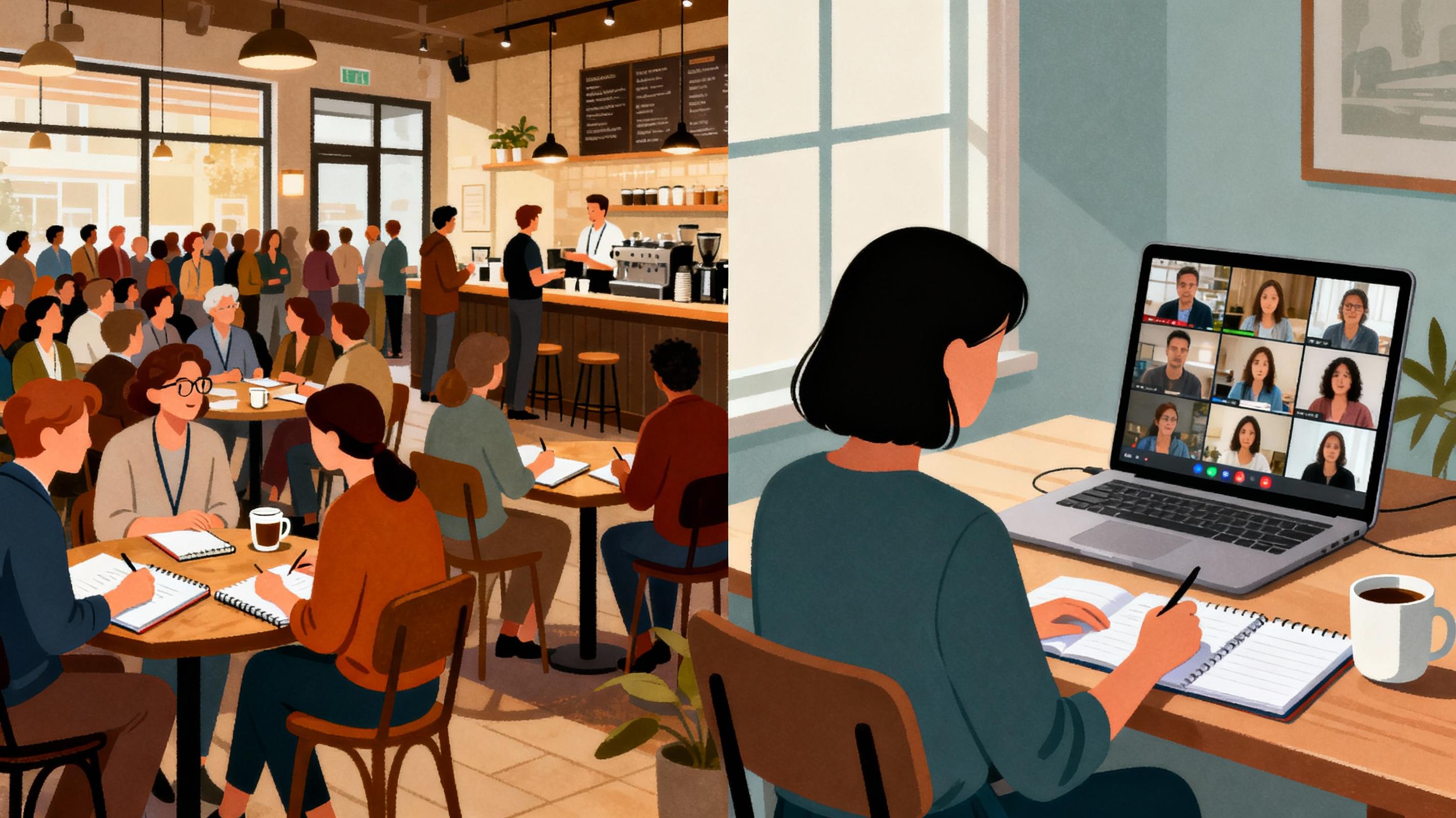
The Writing Community Before and After COVID: An Observation
You know that feeling when everything shifts like the earth beneath your feet suddenly becomes something else entirely, and you're left scrambling to find your footing? Yeah. That was the writing community in March 2020. And honestly? We're still figuring out what ground feels solid.
I'm sitting here, staring at my laptop screen with coffee long since gone cold, naturally and I can't stop thinking about how writing communities transformed during the pandemic. Because here's the thing: we talk about COVID's impact on publishing all the time. We talk about book sales spikes, paper shortages, delayed releases. But the people writing those books? The humans actually crafting the words? Their story is different. Messier. More real.
Before COVID: The Writing Community We Took for Granted
Before the pandemic hit, in-person writing groups weren't just something writers did, they were sacred. And I mean that.
Picture this: Writers meeting in coffee shops, bookstores, libraries, actual rooms with other actual humans. You'd show up at your weekly writing workshop, maybe grab lunch with someone from your critique circle, pitch your agent at a writing conference. There was something about that friction, the uncomfortable chairs, the nervous energy, the person next to you radiating their own creative anxiety, that just worked. It pushed you. Made you feel less alone, even though, let's face it, writing is fundamentally lonely.
Before 2020, literary communities thrived on what I can only describe as controlled chaos. Writing conferences were these intense, three day marathons where you'd network with agents, sit in rooms with bestselling authors, actually feel like you were part of something bigger than your isolated laptop situation. Sure, it was exhausting. Yes, some of those writing groups felt cliquey or competitive. But there was this undeniable magic, the unplanned conversations, the chance encounter with someone whose words would change your perspective.
The writing community structure before COVID had a rhythmic quality to it. Deadlines. Seasonal conferences. Book releases. Speaking engagements. Local author readings. These weren't optional for many serious writers, they were the skeleton on which everything else hung. Without them? Well, we were about to find out.
And here's the uncomfortable truth nobody really talks about: a lot of writers, especially introverts, parents with time constraints, people dealing with anxiety, kind of hated the pre pandemic writing community structure. But nobody admitted it out loud. We just showed up, masked our exhaustion (metaphorically; literally masking came later), and pretended like literary events and in-person networking were the only way to "make it" as a writer.
Fast forward to March 2020. Surprise: plot twist.
The Initial Shock: Absolute Chaos and Bizarre Booms
When lockdown hit, everything and I mean everything moved online overnight. No time to strategize. No time to debate whether it would work. Just... Zoom. Endless, exhausting Zoom.
Here's what happened to book sales during COVID, though: they skyrocketed. I know. Counterintuitive, right? It was giving "everyone's reading because what else is there to do?" vibes. In 2020 alone, print book sales jumped 8%. Audiobooks surged 17%, ebooks up 16%. Publishers made $25.93 billion in 2020, basically the same as 2019, but that number felt miraculous given everything was, objectively, falling apart.
The catch? Most of that success was backlist titles. Established authors. People who'd already "made it". Meanwhile, debuts were getting pushed back months, sometimes years, because of paper shortages. Because supply chains were decimated. Because the entire publishing infrastructure started groaning under pressure.
But here's where it gets weird, and this is the part that applies directly to the writing community: writers themselves started producing more. Not less. In spring 2020, about 38% of writers reported feeling more creative. More available time. Fewer commutes. Fewer distractions (theoretically). A lot of writers suddenly found themselves with space, mental and temporal, they'd never had before.
Online writing groups exploded onto the scene like someone finally opened a door everyone had been knocking on. Virtual writing communities started thriving. People who'd avoided writing workshops because of time constraints or social anxiety or geography suddenly had access. Mailing lists grew. Discord servers popped up. Writers from around the globe started connecting on platforms that didn't require leaving home.
And look, I'm not being romantic about it. The first few months were genuinely chaotic. Burnout among creative professionals skyrocketed alongside the initial enthusiasm. People were working from home while trying to homeschool kids, or grieving, or terrified. Some writers found themselves absolutely uninspired, staring at blank pages, unable to summon anything except dread.
But then something odd happened: virtual writing communities started working. Like, actually working.
The Paradox: More Connected, More Alone
By 2021, the writing community landscape had fundamentally shifted. And this is where I need to pause and be honest: it wasn't all good or all bad. It was... complicated. Layered. Frustrating and liberating at the same time.
Yes, online writing groups reduced barriers. Writers with disabilities, caregiving responsibilities, limited funds, or chronic illnesses suddenly had access. You didn't have to justify the cost of airfare for a writing conference. You didn't have to miss a week of parenting or work or life to attend. You could literally show up from home, in your sweatpants, with your weird sleeping schedule intact.
One study found that 38% of writers felt more creative in 2020, especially those who benefited from flexible schedules and solitude. Some writers thrived in the isolation. Conscientiousness, openness, and life satisfaction predicted who'd do well, basically, people with structure and optimism fared better.
But, and this is a significant but, by 2021, the data flipped. Creativity and productivity started tanking. Why? Because novelty wears off. Because isolation, when it's not chosen, becomes suffocating. Because missing in-person literary events meant missing spontaneous moments of connection that fuel creative work.
Writers reported missing the unstructured conversations. The chance hallway moments. The feeling of being in a room full of people who got it, who understood that staring at a blank page at 2 AM is both agonizing and sacred.
Here's the brutal part: creative professionals started burning out hard. Without the external structure of conferences and readings and in person writing workshops, some writers felt adrift. Others felt liberated but lonely. Still others, especially those with mental health challenges exacerbated by isolation, reported depression, anxiety, and a crushing sense that their work didn't matter.
The loss was real. Writing conferences had always felt exhausting, sure, but they also gave you milestones. Deadlines. A reason to finish something by July for a pitch session in August. Without that? Some writers discovered they're not actually "working on a novel"; they were just thinking about working on a novel, indefinitely, in their pajamas.
The Books That Reflected the Moment
If you want to understand what the writing community was actually experiencing during this period, look at what got written.
2020 and 2021 saw this strange explosion of pandemic memoirs, essay collections, and introspective nonfiction. Not because publishers commissioned them, but because writers needed to process what was happening in real time. Zadie Smith wrote Intimations, this brief, devastating essay collection that just... captured the weird disorientation of March 2020. It was honest, self aware, kind of rambling. Not polished. And somehow that was exactly what readers needed.
There were so many pandemic narratives. Letters written to friends. Observations about isolation. Attempts to make sense of the moment while still in the moment. It was like the entire writing community collectively decided: we have to document this, even though we have no idea what's happening.
Chi Rainer Bornfree and Ragini Tharoor Srinivasan wrote The End Doesn't Happen All at Once, literally 100 letters exchanged from March 2020 to May 2024, chronicling their experience of the pandemic. They said something that stuck with me: they wrote about friendship, interdependence, shared vulnerability. The pandemic was the occasion, but the real story was connection, how you maintain it, how you survive without it, how it sustains you.
By 2022, though? Publishers were basically tweeting: "Nobody wants to read about COVID anymore." The industry had moved on. Writers were told to stop writing about the pandemic, to stop processing it on the page, to pretend it was over.
Which brings me to something I probably shouldn't admit but will: the writing community collectively gaslighted itself about the pandemic. We acted like it was finished. Like we should all just get back to "normal." And normal, of course, was never coming back. It was doing that thing where it pretends to show up while being completely different underneath.
The Reckoning: Supply Chains and Systemic Burnout
Here's what nobody warned you about: publishing burnout in the post pandemic era became absolutely brutal.
Paper shortages starting hitting in fall 2021. Books couldn't get printed. Supply chains were shattered. Lead times for publication went from maybe four months to six months or longer. Which meant editors couldn't acquire as many books in certain seasons because their entire catalog was backed up with postponed debuts.
And then editors started leaving. Not just burning out, actually leaving the industry. Agents reported burnout. Agents who'd been doing this for decades. Some of them were leaving entirely, going into completely different careers.
This created this bizarre bottleneck: fewer editors, fewer imprints (some actually shut down), fewer "slots" for books to be published. And who got shut out? Debut authors. Midlist authors. Basically anyone who wasn't already a bestseller.
The people sitting in writing communities, trying to finish their first novel, hoping to break through, were suddenly facing a publishing landscape that was fundamentally less hospitable. And the tragic irony? They'd spent the pandemic actually writing more. They'd had time. They'd built community through Zoom calls. And then the industry basically said: sorry, we don't have room for you right now.
Loneliness during the pandemic didn't just affect wellbeing in some abstract sense. It affected creativity, productivity, mental health. Studies showed that people with psychiatric vulnerabilities were especially hit hard. And writers, people who spend hours alone with their own thoughts, were inevitably more vulnerable to those effects.
Some writers reported that social distancing, while necessary, fundamentally disrupted their creative process. Not because they needed people in the room (though some did), but because the stress of isolation affected their ability to create. The uncertainty. The worry. The monotony.
One writer described it like this: "Double burden of work and childcare or homeschooling, unstructured everyday life, different daily routine, distractions, less inspiration due to lockdown, missing impressions from the outside world, exchange with colleagues and creative meetings were missing".
Ugh. Yeah. That.
The Pivot: What Actually Happened to Writing Communities
So what survived? What actually worked in the new reality?
Hybrid writing groups. Flexible writing communities. Asynchronous writing groups where you don't have to be "on" at the same time. Some of the most successful online writing communities were the ones that just... let people show up however they could.
One university writing center found something fascinating: their hybrid and fully virtual writing groups actually built community just as effectively as in person ones. Maybe more effectively, because people could participate from home, didn't have to perform wellness, could have their faces on or off depending on the day.
The low stakes nature of virtual participation worked for people who'd been terrified of in-person writing workshops. You could share a Google Doc comment instead of speaking out loud. You could listen from the comfort of your living room. You could disappear into the Zoom room if you needed to.
Writing conferences started doing this weird hybrid thing. Some conferences offered both in person and virtual attendance. Which sounds like it shouldn't work, but it kind of did, people who couldn't fly could still attend. People with disabilities could participate. The barriers that had always excluded people suddenly felt less absolute.
Online writing communities on platforms like Discord, Reddit, and specialized writing apps absolutely exploded. Writers from Kenya and Australia and Canada and Ohio all in the same Discord server, cheering each other on, trading tips about agents and publishing and how to write a decent query letter.
The pandemic actually proved something that some of us had suspected: geographic isolation isn't actually the limiting factor for writers. You don't need to live in New York. You don't need to go to conferences. You can build meaningful, accountability driven, creatively fertile communities entirely online.
Which is lovely and also... unsettling? Because it means all those barriers we used to cite, time, money, location, those were kind of a choice, weren't they?
The Mental Health Reckoning Nobody Wants to Talk About
Okay, I'm going to say something that feels necessary and also risky:
Writers' mental health during the pandemic was absolutely devastated in ways we're still processing.
Loneliness and psychiatric vulnerability combined to create this perfect storm. People who already struggled with depression or anxiety found the isolation catastrophic. But even people without pre existing conditions reported new anxiety, new depression.
The psychological distress wasn't just about missing human contact (though that was definitely part of it). It was about missing structure. Missing purpose. Missing the feedback loop of an audience. Writers who thrived on the external validation of writing conferences or in-person workshops suddenly had no external pressure. For some, that was liberating. For others, it was paralyzing.
Studies showed that people with higher neuroticism, and let's be real, creative people tend to skew that direction, experienced more negative effects from social isolation. Conscientiousness and life satisfaction were protective factors, but they only went so far.
And here's the part that's hard to admit: some writers got better because their entire social and professional life went online. Introverts. People with social anxiety. People juggling childcare. Some of these writers found that removing the performative aspect of in-person writing communities actually allowed them to be more creative, more present, more themselves.
Which means the pre pandemic writing community structure was never actually optimal for everyone. We just pretended it was.
But the cost of discovering that? Mental health crises across the entire industry. Burnout so severe that people left publishing entirely. Creative professionals questioning whether their work mattered at all.
The Observation: What We've Actually Learned
Fast forward to now, and the writing community landscape looks... different. There's no one reality. It's fragmented.
Some writers are back in writing conferences, grateful for the connection and the pressure. Some writers are 100% remote, more productive than ever, building entire reading audiences through online communities. Some writers are doing hybrid, in person for some things, virtual for others, depending on the day and the energy and whether their kid's school closed due to illness (is that still happening, or was that just a pandemic thing?).
Here's what actually changed, though:
First, we discovered that virtual writing communities aren't actually inferior. They're just different. For some writers, probably more writers than we admit, they're better. And that's... not being integrated into the industry yet. Agents still valorize in person meetings. Conferences still charge premium prices for the "networking." The assumption remains that in-person literary events are the gold standard.
But they're not. Not anymore. Not for everyone.
Second, the publishing industry became more hostile to new writers while simultaneously becoming more accessible to existing ones. Book sales surged, but the benefits went to established authors. Debuts got shelved. Midlist authors got dropped. The entire "golden age of publishing" that was supposed to result from the pandemic sales bump? Never materialized for most writers.
Third, and this is the one that keeps me up: we discovered that the writing community doesn't actually need geographic proximity to function. You can be part of a thriving, supportive, creatively fertile community with people you've never met in person. Which is amazing and also makes all those conferences and expensive writing MFAs start to look... questionable.
Fourth, and maybe most importantly, we learned that mental health in the writing community needs to be treated as seriously as commercial viability. Writers shouldn't be choosing between isolation and participation. Between accessibility and community. The industry somehow created a structure where writing groups required performance, travel, time, money. And then got shocked when many writers couldn't access them.
The Uncomfortable Truth
So here's the thing: I genuinely don't think we're going back to the pre pandemic writing community model. I don't think we should.
But I also don't think we've actually figured out what comes next.
We have all these tools now, Zoom, Discord, hybrid conferences, asynchronous writing groups. We have proof that online literary communities work. We have evidence that flexible structures benefit writers with diverse needs.
And yet. The industry still operates like the old model is the default. Agents still prioritize in person pitches. Conferences still ask writers to travel. Publishers still move slowly, still exclude debuts, still seem determined to make publishing harder for new voices.
The writing community, I think, is in this weird liminal space. We've learned that we can exist without the old infrastructure. But we haven't yet built a new one that's actually equitable.
Maybe what we're experiencing isn't an "after COVID" writing community, but a fractured one. Writers choosing different paths. Some in person, some online, some hybrid. Some successful, some abandoned, most somewhere in between.
The pandemic didn't end the writing community. It just exposed the fact that there was never actually one unified community to begin with, just a bunch of writers trying to survive and create and be seen, doing it in whatever way kept them sane.
And honestly? That feels truer than the myth we were selling before.
Sponsored
Sponsored
Categories
- AI
- Design
- Fashion and Art
- Investment and Finance
- Top 10
- Christianity
- Climate and Enviroment
- Writing and Film
- Fitness
- Food
- Games
- Gardening
- Health
- Home and Interiors
- Marketing and Sales
- Music
- Making Money Online
- Others
- Books
- Religion
- Ecommerce
- Sports
- Cars
- Wellness
- Tech Gadgets
- Events
- Governments and Nations
- Science and Engineering
- Real Estate
- Travel, Tourism and Hospitality
- Education
- Startups
- Beauty and Cosmetics
- Agriculture
- Computer Operating Systems
- Crypto
- Politics and News
- Video Review
- Immigration
Read More
Executive Summary Polyclonal Antibodies Market Size and Share: Global Industry Snapshot Global polyclonal antibodies market size was valued at USD 1.17 billion in 2024 and is projected to reach USD 1.83 billion by 2032, with a CAGR of 5.70% during the forecast period of 2025 to 2032. Businesses can depend with confidence upon this superior Polyclonal Antibodies Market report to bring...

Executive Summary Household Cleaners Market Value, Size, Share and Projections CAGR Value: The household cleaners’ market size is expected to grow at a compound annual growth rate of 5.09% for the forecast period of 2021 to 2028. Household cleaners’ market report analyses the growth, which is currently being growing due to the rise in prevalence for the automatic...

In the ever-demanding world of action-packed gameplay, where survival is as crucial as offense, the Warborne Above Ashes Consumables Recovery Potion emerges as a vital asset for players looking to maintain their edge in tough battles. This special consumable item is a game-changer, offering a unique blend of instant healing and strategic advantage during intense encounters. Let’s dive...
The global rare earth magnet market continues to expand as industries demand high-strength, compact, and energy-efficient magnetic solutions. Rare earth magnets, particularly neodymium and samarium-cobalt, are used extensively in electric vehicles (EVs), renewable energy systems, consumer electronics, robotics, and industrial machinery. Their unique magnetic properties, including exceptional...
The global Night Vision Device (NVD) market is witnessing strong expansion as governments, law enforcement agencies, and commercial users continue to adopt low-light and no-light visibility technologies. With rising geopolitical tensions, increasing cross-border conflicts, and the growing need for real-time surveillance, night vision systems have become indispensable in modern...